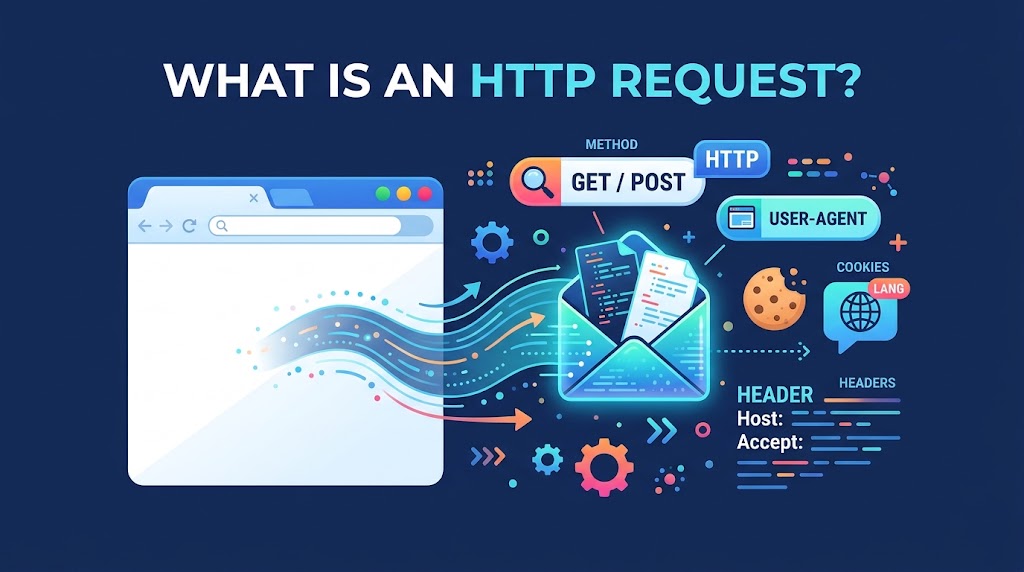
Inside an HTTP request packet: what does the browser send to the server?
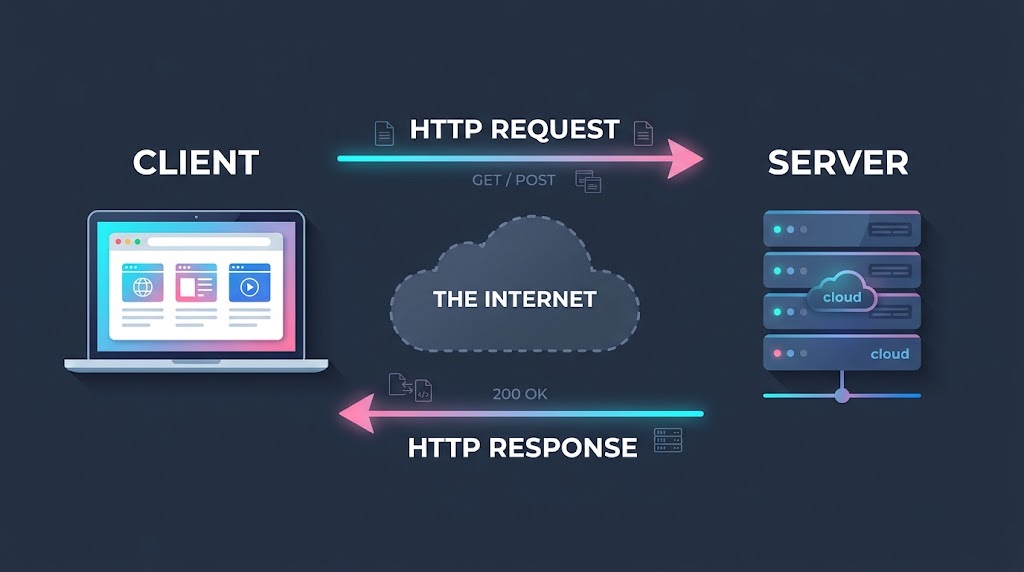
Every time you visit a website, the browser doesn't just casually say, "Let me see this page." Instead, it bundles a wealth of details into an electronic message called an HTTP Request Package.
A standard HTTP request packet consists of three main components carrying the browser's context and instructions:
Request Line: Declares the action the browser wants to perform via the HTTP method (
GETto retrieve data,POSTto submit data,PUT/DELETEto update or remove resources), the target resource path (URL/Path), and the HTTP version.Request Headers (Browser metadata & context): Attaches the browser's "profile" so the server can deliver the most suitable response, including:
User-Agent: Browser name, version, and operating system in use (e.g., Chrome on Windows, Safari on iPhone).
Accept & Accept-Language: Preferred data formats and languages requested by the browser.
Cookie & Authorization: Active session tokens, shopping cart states, or account credentials.
Request Body (Data payload): Holds the actual data submitted to the server (such as login credentials, comment text, or uploaded files—typically used with
POSTorPUTmethods).
#HTTPRequest #Browser #WebProtocol #LapTrinh #Developer #KienThucCongNghe





0 Comments
No comments yet. Be the first to share your thoughts!
Leave a Comment